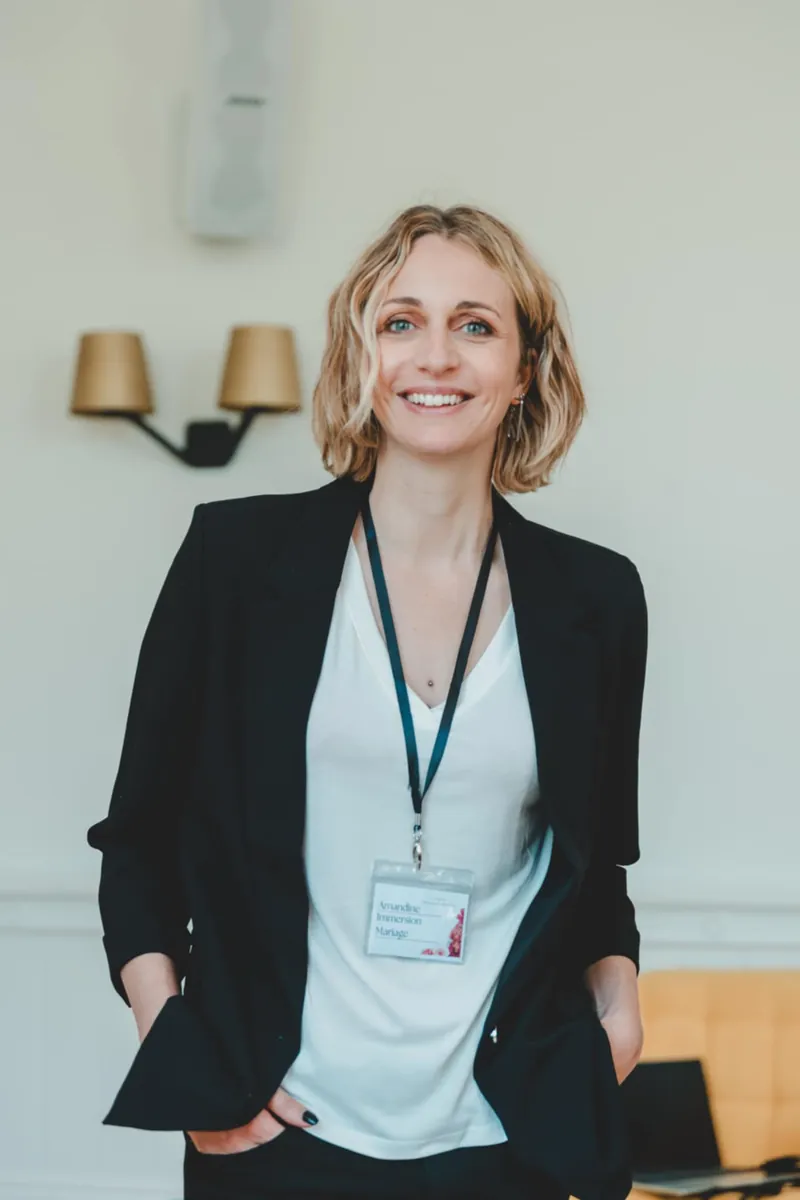
By Amandine, celebrant and wedding planner in Alsace
The day after a wedding there is always a peculiar silence. Adrenaline eases. Flowers begin to wilt. In that quiet, memories return — mostly sweet, sometimes tinged with a small regret.
Most couples do not regret the caterer, the dress, the music or the flowers.
The regret that appears most often concerns the ceremony. It feels like it went by too fast, or that it did not feel like them.
I have accompanied couples in Alsace, across France and abroad since 2013. I have heard these regrets many times: in first conversations with newly engaged couples who witnessed a friend’s wedding and vowed to do things differently, and in messages received after the fact, honest and moving.
Why do couples feel the ceremony went by too fast?
Because the ceremony was poorly paced. Too many elements, or too rushed to avoid “boring guests”, compress time. Couples try to include every reading, ritual, testimony and surprise song. In that accumulation, the essential is lost.
A well-built secular ceremony is not a checklist. It is a score that leaves room for silence, gaze and breath. My work begins by asking not “what do you want to put in?” but “what moment do you want to live through together?” That answer changes everything that follows.
“Our ceremony could have been anyone’s” — why does this hurt?
This regret strikes at a couple’s identity.
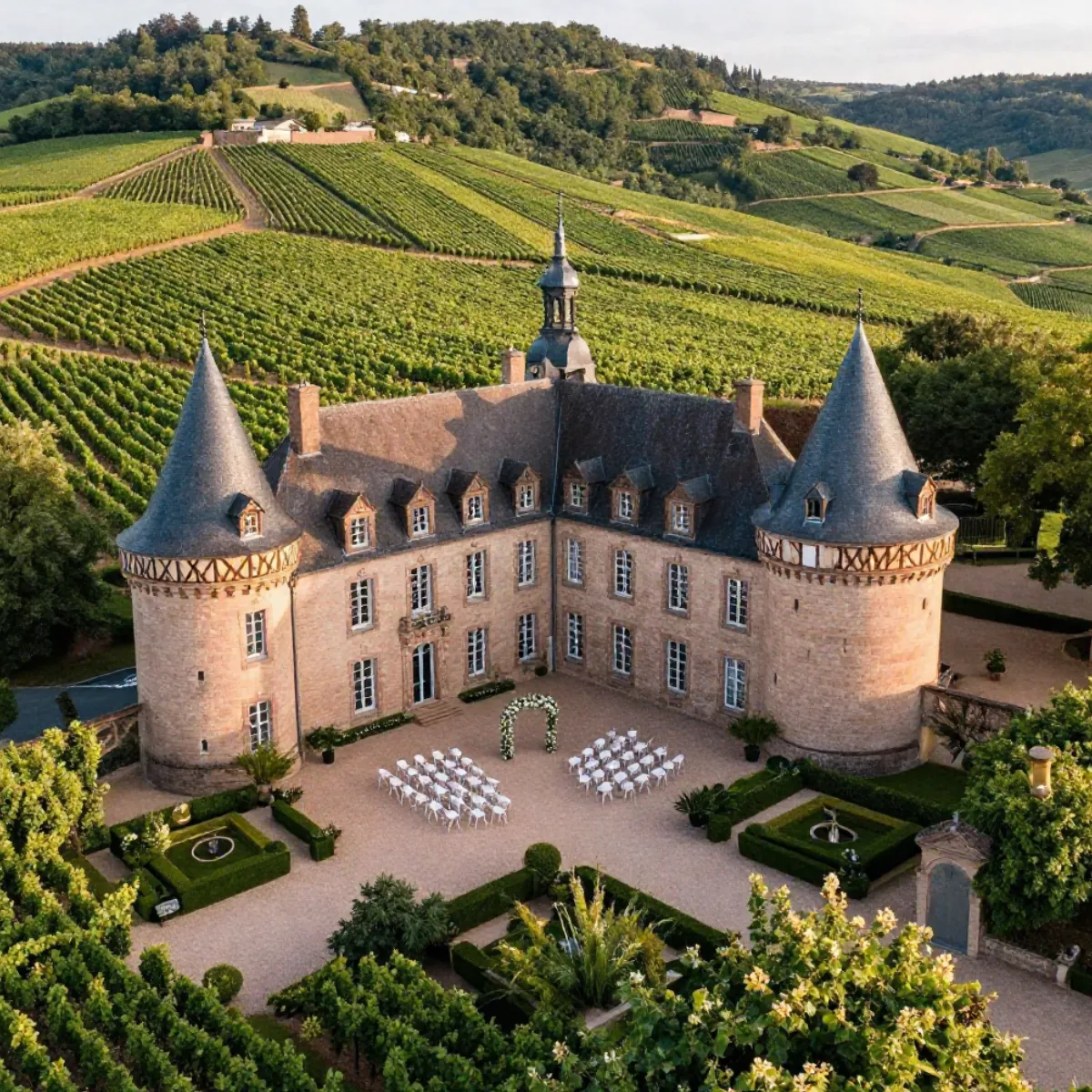
They may have chosen a unique wine estate on the Route des Vins and worn outfits that reflect them. Guests travelled for them. Yet the ceremony felt like a Pinterest template: familiar texts, conventional phrases, nothing that said who they were in that place, on that day.
This often results from drafting a ceremony without real preparation: a few emails, a twenty-minute call, and a generic script dressed with their names.
Preparing a personalised ceremony requires several hours with the couple, sometimes spread over weeks. It means understanding their story, how they speak, what makes them laugh, what shaped them. It means finding the right metaphor — not the prettiest on paper, but the one that truly belongs to them.
A successful ceremony leaves guests thinking: “Yes. That is exactly them.”
“We should have chosen our celebrant as carefully as our venue” — how to choose well?
Many couples spend months finding the perfect venue and choose their celebrant in a few days — by default, by a vague recommendation, or because they were the cheapest available.
That imbalance often costs dearly on the day.
The celebrant is the only person who speaks throughout the core moment of your wedding. Their voice, pacing and presence set the tone. A poorly chosen celebrant can flatten a ceremony in minutes, even with a beautiful text.
Couples who lived this advise: meet your celebrant before booking. Not a fifteen-minute call, but a proper meeting, in person or by video. Feel whether there is a connection. Notice if they listen rather than fill a form. Observe the questions that surprise you.
Human connection is not a detail in this work. It is the heart of it.
“We gave too much time to others and not enough to each other” — how to keep the ceremony centred?
Testimonies from family and friends are often lovely. But when they take up half the ceremony, they become the centre — at the expense of the couple.
I often hear: “We felt like we were watching our ceremony instead of living it.”
A celebrant must design the space: who speaks, when, for how long and for what purpose. Testimonies should illuminate the couple without capturing the ceremony. They are glimpses of the couple, not parallel performances.
A simple rule I apply: every element should redirect attention to the couple. If a reading, speech or ritual creates too long a parenthesis, it needs reworking or repositioning.
“Our vows were too short — or too written” — what works for vows?
Vows are the most intimate part of the ceremony. Ironically, couples often put the most pressure on themselves and produce something that does not resemble them.
Two symmetrical pitfalls: vows that are too short (sincere yet leaving everyone wanting more) and vows that are over-written, polished and literary, which do not feel credible.
Couples almost always regret not saying what they truly wanted to. Fear of crying, fear of emotion, fear of others’ reactions often silences them.
My support with vows is one of the most important parts of my work. Not to write them for the couple, but to help them find their words, own them and deliver them with confidence on the day. Imperfect, true vows are always more valuable than perfectly rehearsed lines.
What do these regrets tell us about the ideal ceremony?
These regrets point to one truth: a successful secular ceremony is not improvised and not delegated to a formula.
It requires time — to get to know the couple, to write and to refine. It requires a celebrant who knows when to step back and when to take the space. It requires an external eye able to see the couple as they are and to find the words that reveal them to others.
That is what I offer every couple I accompany in Alsace and beyond: not just a beautiful ceremony, but their ceremony. The one they will remember as the most honest moment of their day.
Planning a wedding in Alsace and want to avoid these regrets? Let’s talk — no commitment, just a conversation to see if we connect.
Frequently asked questions
How long should a secular ceremony last?
A well-paced secular ceremony typically lasts between 20 and 35 minutes, depending on the number of readings and rituals. The exact duration should be decided to preserve attention and emotion. Too short and it feels rushed; too long and it dilutes the focus on the couple.
Can testimonies be kept without stealing the show?
Yes. Limit each testimony to 2–3 minutes, ask contributors to focus on specific memories or qualities, and position testimonies so they support the narrative about the couple. The celebrant must edit and sequence them to keep attention on the partners.
How can we prepare vows if we are afraid to cry?
Practice aloud, in private, and write a concise version plus short prompts to stay present. Work with a celebrant who helps you shape the message and rehearses delivery. Tears are not a problem; they often make the moment more authentic and remembered.
Is a long preparatory process necessary for every couple?
A full preparation is recommended when the couple wants a personalised ceremony that reflects their history and voice. For simpler, very short ceremonies, a lighter process may suffice. The trade-off is between time invested and the level of personalisation achieved.
How do you ensure a ceremony feels unique to our relationship?
I spend several hours with each couple to learn their story, language and humour. I weave those details into the structure and wording of the ceremony so guests recognise the couple. This approach avoids generic scripts and creates moments that feel unmistakably theirs.