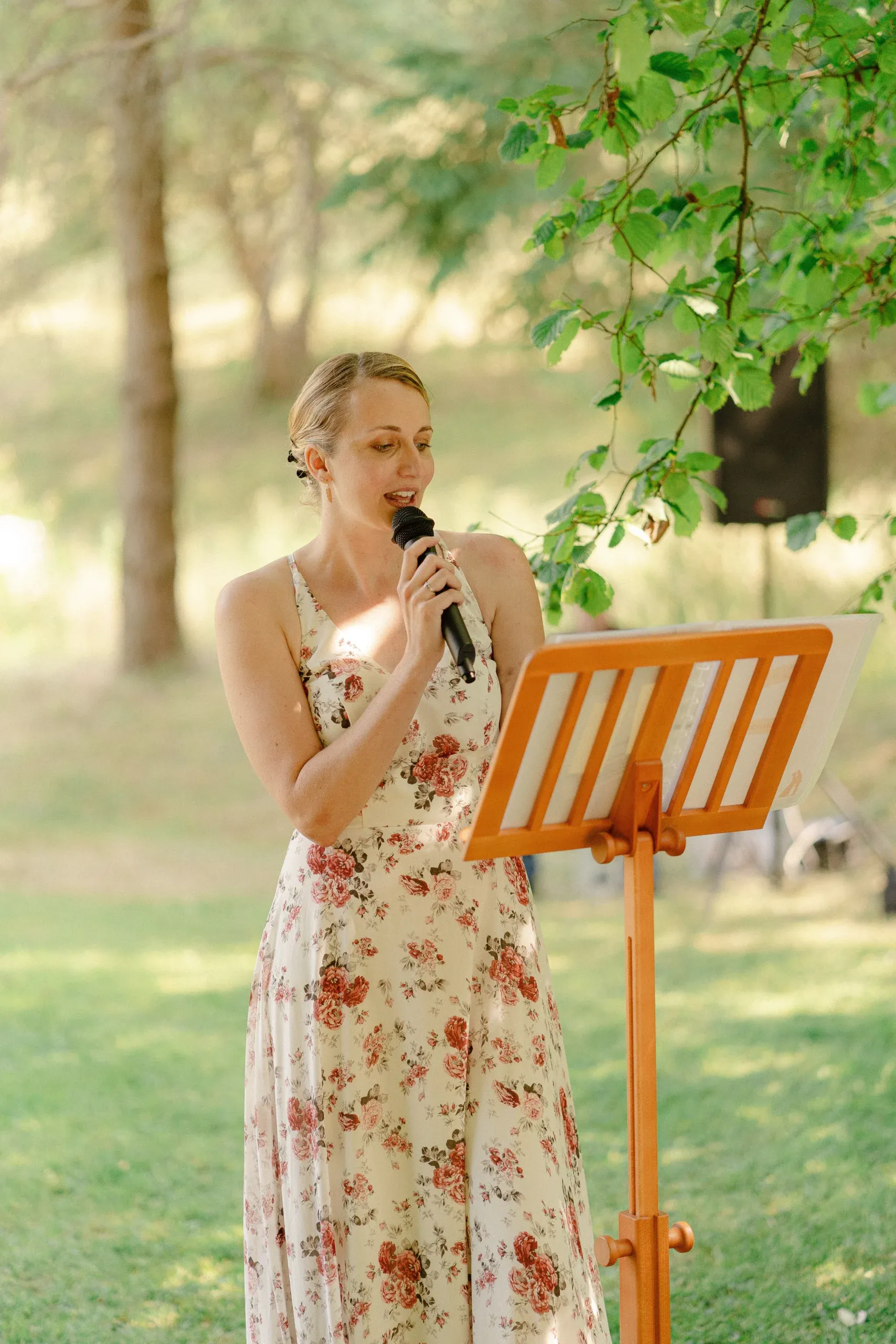
Officiating a secular wedding ceremony is both a responsibility and an opportunity to create lasting memories. If you have been chosen, or are considering the role, this guide explains how to prepare the ceremony, structure the service and deliver speeches that reflect the couple’s story, in Alsace, France.
An officiant shapes the ceremony’s tone, writes or adapts the texts, coordinates rituals and manages the flow so the couple and guests feel supported and present. This role requires public-speaking skill, basic logistical planning and sensitivity to the couple’s wishes.
What is the role of the secular ceremony officiant?
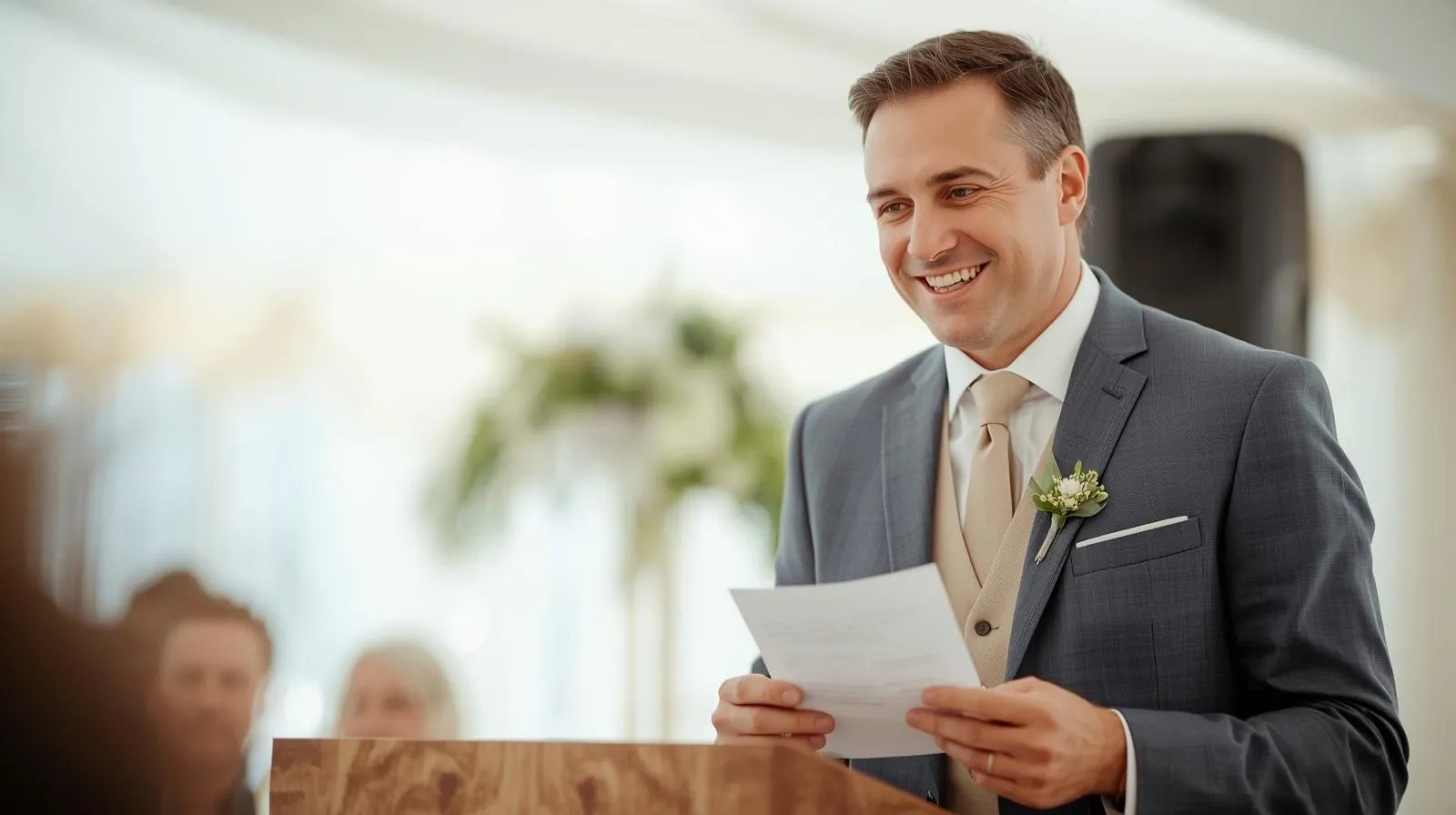
The officiant leads and shapes the ceremony from start to finish. They write or adapt texts, introduce readings, explain rituals and ensure transitions run smoothly. Unlike religious services, a secular ceremony allows full customisation; the officiant therefore blends speechwriting, stage direction and simple event coordination.
An officiant typically: write bespoke texts that tell the couple’s story; select and introduce symbolic rituals; coordinate timing with musicians and venue staff. A common error is to include overly long speeches that break the ceremony’s rhythm; keep individual speaking parts concise.
For tailored support, feel free to contact a celebrant.
Why choose a close friend or family member to officiate?
Choosing a close person adds intimacy and personal detail that a hired celebrant may not know. A friend or relative can bring anecdotes and an authentic voice that resonate with guests and the couple.
This choice also comes with obligations: the chosen person must be comfortable speaking publicly, ready to invest time in preparation and willing to work closely with the couple on tone and content. Many couples arrange a few rehearsal meetings so the officiant gains confidence and the text is refined.
What are the key steps to prepare a successful secular ceremony?
Start with planning, then write, rehearse and coordinate logistics. Preparation ensures the ceremony stays focused, meaningful and on schedule.
Writing the personalised texts and speeches
Begin by collecting stories, shared moments and the couple’s wishes. Use a clear, natural voice that reflects the couple: humorous if they are playful, poetic if they favour lyricism. Include short quotes, personal vows or light anecdotes to vary the tone.
A practical tip: time each reading and speech during rehearsal. An error often seen is underestimating length; rehearsed texts avoid awkward silences and keep the ceremony under the intended duration.
Organisation and timing
Create a detailed order of service listing introductions, readings, rituals and the conclusion. Review this programme with the couple and any readers at least once before the wedding day.
Confirm who speaks at each moment, which music cues accompany transitions, and how to handle minor interruptions. Clear roles and a printed running order help prevent stress on the day.
How can symbolic rituals enrich the ceremony?
Meaningful rituals anchor the ceremony and provide visual, emotional markers of the couple’s commitment. Choose rituals that reflect the couple’s story and beliefs.
Popular secular rituals with simple symbolism
- Sand ceremony: Partners pour different coloured sands into a single vessel, symbolising two lives blending into one.
- Unity candle: The couple lights a central candle from their individual candles to show joined paths.
- Tree planting: Planting a young tree during the ceremony represents growth and rooted commitment.
Tailor each ritual so it feels relevant. A ritual performed without context can seem decorative rather than meaningful: always introduce its significance briefly to the guests.
How do you create the right symbolism and atmosphere?
Symbolism and ambience come from a balanced mix of setting, decor and sound. The goal is an environment that feels both solemn and welcoming.
Choosing the location and decoration
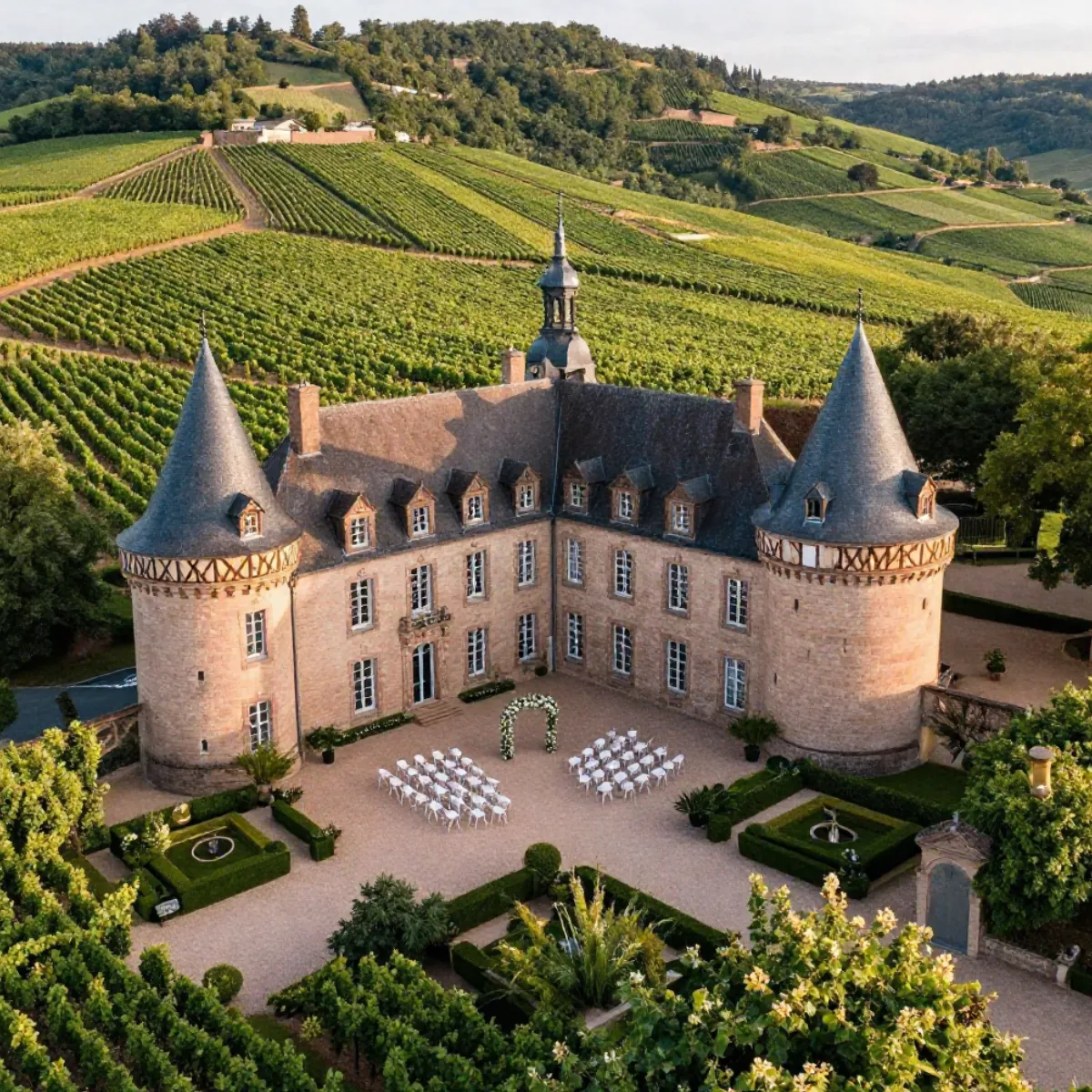
Select a place that matches the couple’s vision—an intimate garden, a vineyard on the Route des Vins or a reception room dressed to their taste—so the setting naturally supports the ceremony’s tone. Decoration should reinforce the theme: floral arrangements, soft lighting and fabrics that frame the couple without distracting from the ritual.
A frequent mistake is over-decorating the ceremony area. Keep focal points clear so guests’ attention stays on the couple.
Music and sound
Music underscores entrances, vows and the couple’s exit. Assign a track to each key moment: processional, vow exchange and recession commonly have distinct pieces. Verify sound equipment and run a quick tech check before the ceremony to avoid sudden stops or volume issues.
Conclusion
If you feel uncertain, accept that support is normal: collaborate with the couple, rehearse aloud and simplify where needed. For professional assistance or to discuss officiating in Alsace, please Plan your wedding.
Frequently asked questions
What qualifications are required to officiate a secular ceremony?
No official certification is required to officiate a secular wedding ceremony in France. Practical skills—public speaking, writing and a clear understanding of the couple’s expectations—are what matter. Workshops and mentoring from an experienced celebrant can speed up preparation for first-time officiants.
How should I integrate secular rituals into the ceremony?
Choose rituals that hold clear meaning for the couple and introduce each one briefly before it begins. A short explanation helps guests engage and prevents the ritual from feeling decorative. Rehearse the practical steps so transitions stay smooth and timing remains consistent.
What are the best tips for writing personalised ceremony texts?
Focus on authentic stories and specific moments rather than general statements. Use simple language, balance humour and emotion, and ask the couple to approve drafts. Practise aloud to check tone and length; aim for variety to keep guests engaged.