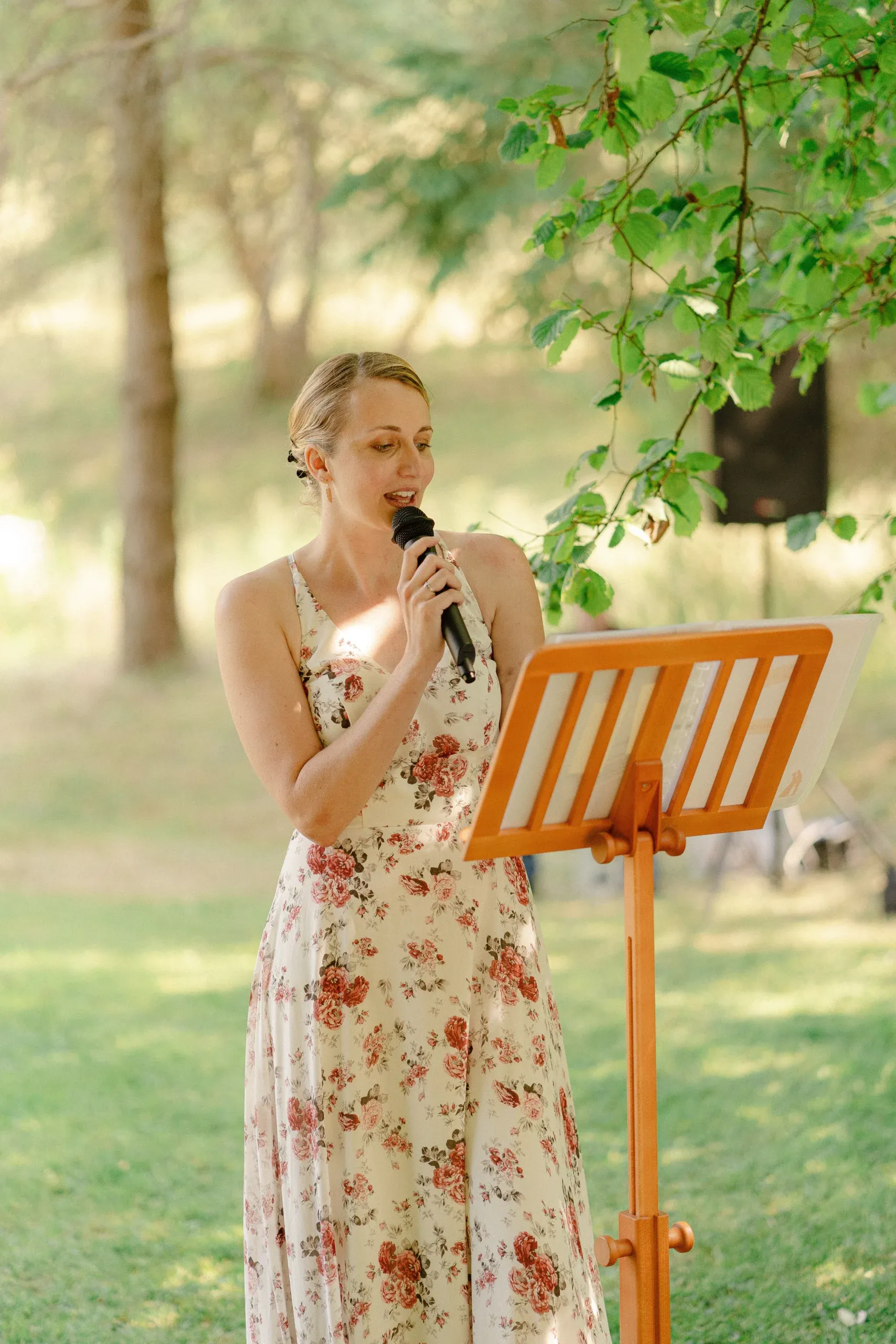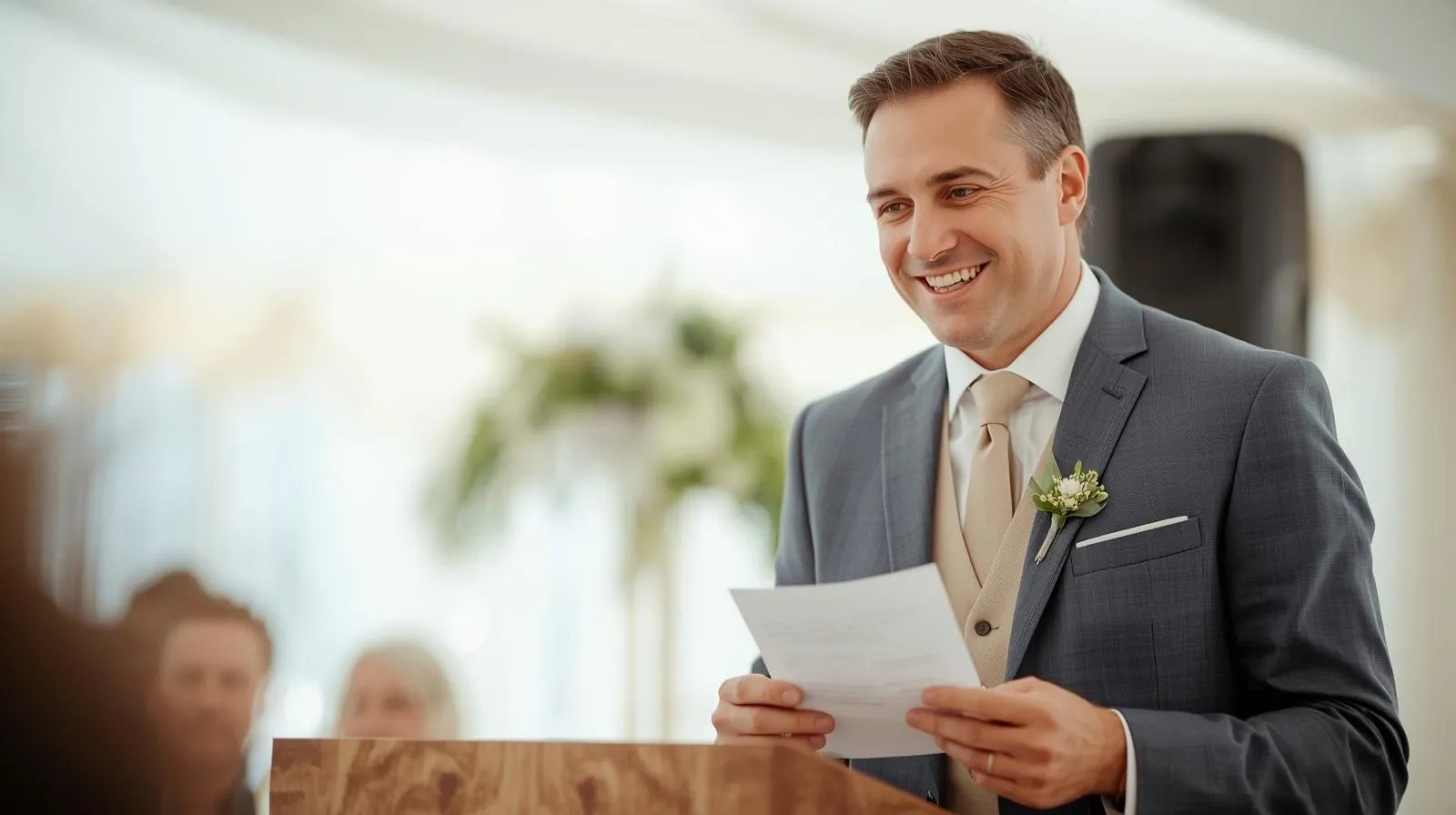
Being asked to be a witness is a huge honour, and it often brings a little anxiety when the key question arrives: "What am I going to say into the microphone?"
Between the fear of a blank page, public-speaking nerves and the wish to do well, writing a speech can feel overwhelming. As a wedding planner and ceremony officiant, I have heard hundreds of speeches. Here is my step-by-step method to write a text that will make the couple’s eyes shine without making your hands tremble.
Start your preparation early, structure your story, practise out loud, and keep your delivery personal yet concise. These four steps will let you deliver a moving wedding speech while staying calm.
Why should you not start the day before?
You must not improvise at the last minute. Nerves usually come from lack of preparation. Start thinking about your speech one month before the wedding. Decide on the story you will tell and rehearse it aloud at least three times.
Your speech should last 3 to 5 minutes. That length captures attention without losing the audience. Rehearsing helps you respect timing and calm your breathing.

What structure reliably makes a speech emotional and clear?
A good speech needs a clear thread. Use this structure and you will keep the audience with you: introduction, one anecdote, connection to the couple, and a positive conclusion.
- Introduction (30 sec): Say who you are briefly and thank the couple. Not everyone may know your connection to them.
- The anecdote (2 min): Choose ONE striking memory. Do not recount your whole life. Pick an anecdote that illustrates a trait of the bride or groom (loyalty, offbeat humour, kindness).
- Link to the couple (1 min): Explain why, in your view, they complement each other. This is where emotion rises.
- Conclusion (30 sec): Raise a toast and finish on a joyful, positive note.
What mistakes will ruin the moment?
Avoid these three errors to keep the atmosphere warm and inclusive.
- Private jokes: If only three people in a room of 100 understand a joke, most guests will switch off.
- Listing ex-partners: Jokes about past relationships look cheap and often fall flat.
- Reading every word: Do not script every sentence if you can avoid it. Use note cards with keywords. That helps maintain eye contact with the couple.

How do you manage nerves on the wedding day?
Even a great text can be spoiled by stage fright. Use these practical mic tips I give to speakers every weekend.
- Breathe: Take three deep breaths just before you stand.
- Look up: Do not stare at your paper. Look at the couple first; they are your safe point.
- Keep water handy: Have a glass of water nearby. Avoid strong alcohol right before speaking.
Conclusion
Prepare early, structure one clear story, and rehearse aloud to control timing and nerves. If you would like help polishing a speech or practising your delivery, contact me via plan your wedding to set up a short coaching session.
Questions fréquentes
How long should a wedding speech be?
A wedding speech should be 3 to 5 minutes. This duration is long enough to tell one meaningful story and short enough to keep the room engaged. Practise with a timer to hit the target.
Should I memorise my speech word for word?
No. Memorising every word can sound rigid and increases the risk of panic if you forget a line. Use note cards with keywords and practise transitioning between points.
What if I get emotional and can’t continue?
Pause, breathe, take a sip of water and look at the couple. A short, honest pause is natural; the audience will be sympathetic. Practising emotional moments in advance helps.
Can I use humour in my speech?
Yes, but choose inclusive humour that the majority will understand. Avoid jokes that rely on private references or the couple’s past relationships.
Is it better to write the speech in advance or improvise?
Write and structure the speech in advance, then practise enough to speak naturally. Improvisation without rehearsal increases the chance of rambling or of hitting awkward topics.